
There was just dead silence…
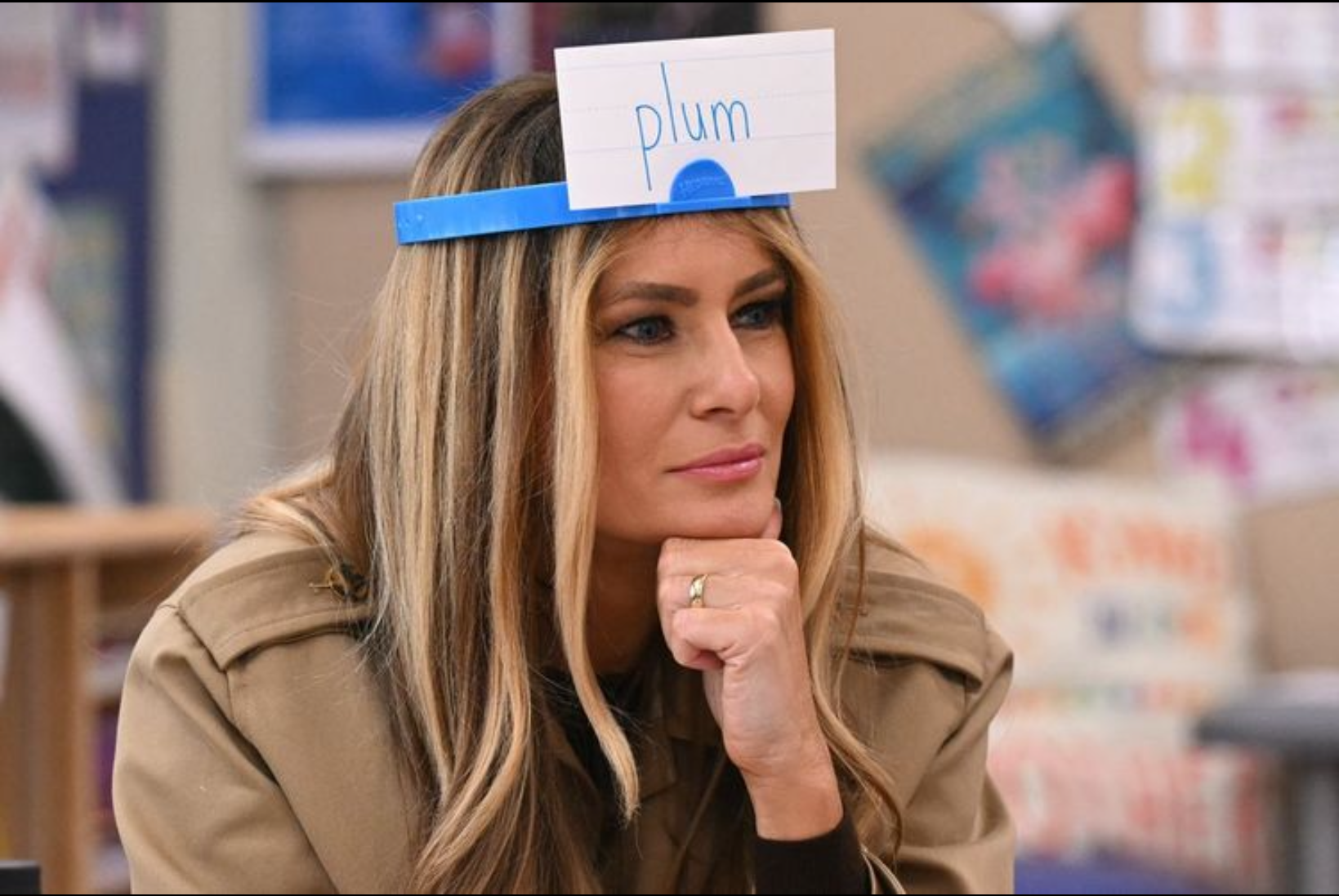
When I saw this photo in the newspaper recently, I sent to it to Clive and asked him ‘What does it remind you of?’. He responded immediately, ‘That conference in Sevilla’. When we were teaching at the British Council we were encouraged to go to conferences and then report back to our colleagues about any interesting ideas we had heard. At this particular conference, Clive was there with a colleague, Tom. They decided to go together to a talk called ‘Making pronunciation fun’, and agreed to meet in the room where the talk was taking place. Clive arrived a bit late and peeked through the door. He saw Tom sitting there looking extremely miserable, with a phonetic symbol attached to his forehead. He desperately gestured to Clive to come in and share his misery, but Clive grinned, waved, and shut the door. When he told me about this, we concluded that although this type of interactivity works for many teachers, it was maybe not for us, and in future we would be wary about going to a talk with the word ‘fun’ in the title!
Later on, once the first edition of English File had been published, Clive and I went to many conferences where we either gave a joint talk or gave two separate talks. In general, although in the early days we had found public speaking quite nerve-racking, we enjoyed ourselves. We balanced each other out well, as we had different strengths and weaknesses. One of Clive’s many great strengths was his ability to tell jokes, and two of my favourite memories from those days involve his jokes. Despite Clive being a consummate joke-teller, there is always a bit of a risk with telling jokes in a talk, basically either that the audience may not find a joke funny, or that they may not get the joke. The first happened when we were doing a joint tour of Italy, each giving a different talk. We were in Florence, and I had given my talk, and was sitting outside the room where Clive was giving his. I could hear him talking through the door, and as he got towards the end of his talk, I heard him embark upon one of his favourite jokes. It was rather long-winded, and I think involved a hare and a tortoise. He told it with his habitual skill, building up nicely to the punchline, which he delivered with panache. I waited to hear the laughter from the audience – but it never came! There was just dead silence. He finished the talk, there was applause, and came out, and he and I both dissolved into fits of laughter trying to work out what had gone wrong, and why no one in the audience had found the joke funny. We never found out, but maybe some day a teacher who was there will remember it and explain!
The next occasion was a talk we were giving together in Poland. The talk ended with a joke, told of course, by Clive. Although it would not be considered appropriate nowadays, at the time it was perfectly acceptable, and related to the then common topic of ‘men and women’, which we had been talking about. The joke went more or less as follows:
M15 are interviewing potential candidates to become spies. They have got down to the final three and give them each a final interview.
The first candidate comes in, and the panel hand him a gun. They then tell him, ‘Your wife is sitting in a room down the corridor. You need to go there and shoot her.’ The man immediately refuses, and the panel tell him to leave.
The next candidate arrives and is told the same thing. He takes the gun and leaves the room, but then comes back in sobbing, ‘I can’t do it!’, and is dismissed.
The third candidate is a woman. The panel tell her that her husband is in a room down the corridor, and hand her the gun, telling her to go and kill him. The woman takes the gun and walks out. There is a short silence, and then some banging and shouting. Then silence again. The woman comes back in.
‘What happened?’ the panel ask her.
‘The bullets were all blanks,’ the woman replies, ‘so I had to kill him with the chair’.
The joke went down very well, but what I most remember is the reaction of one slightly bemused audience member who didn’t quite get the joke, and as the laughter died down, called out, ‘But… did she get the job?’! Clive and I became a bit hysterical at this point.
Our trips to conferences were always hard work, but really beneficial. One reason was because of some of the great speakers we heard. Some of the really valuable points such speakers made have stuck in my mind ever since and almost certainly influenced our writing. For example, I vividly remember the great Penny Ur giving a talk about memory, and saying that research had shown that students need to see a new vocabulary item at least eight times before they were able to use it actively. This encouraged us to try to recycle new lexis at every opportunity possible, in videos, in games, or just in grammar practice sentences. I also remember a talk of Adrian Underhill’s where, by focusing on mouth position, he was able to get a room full of British teachers to say the French ‘tu’ with the perfect ‘u’ sound, one which previously they had been unable to make. This inspired us to include the mouth position videos in English File. A recent talk at IATEFL in Edinburgh by Olga Sayer also taught me a great deal about how generation alpha learn. Another huge advantage of conferences is the opportunity to meet teachers from all over the world, many of whom have contributed to English File with their valuable feedback. We also benefitted from meeting many extraordinary people who were working for OUP. I got to know some of them so well that we became close friends and still meet up whenever we can. Despite the fact that most of them have moved on to other careers, I hope these friendships are never lost.