
It’s much harder than you might think
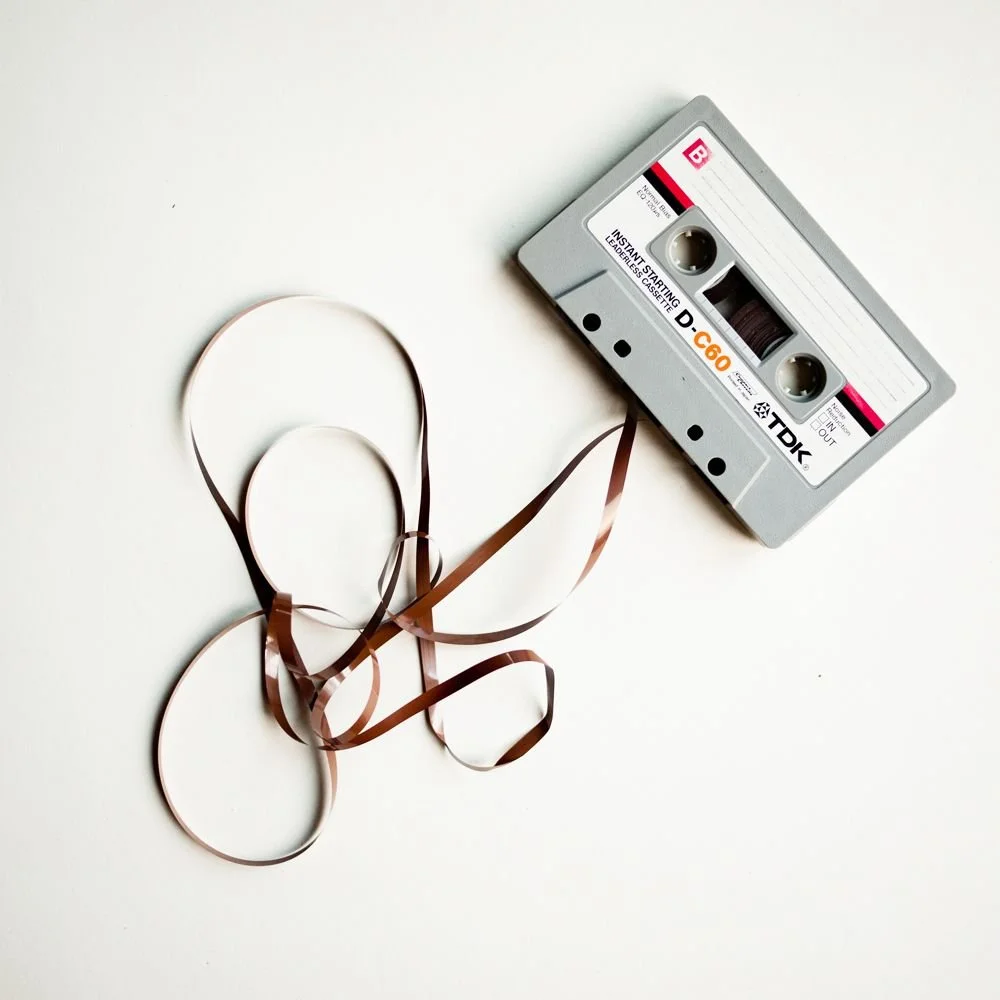
Most teachers I know find it much easier to remember classes where everything went wrong rather than successful classes! For me, the ones that went wrong were frequently related to audio. The number of things that could go wrong were endless:
The cassette player (yes, that’s what we used when I started teaching) wasn’t working.
The cassette player had been borrowed by another teacher whose player wasn’t working.
The player chewed up the tape, which even when untangled (using a pencil) never played properly again.
The cassette had been incorrectly labelled or put back in the wrong box, requiring a trip back to the staff room to try to find the right cassette.
Some years later, same as 1, but with a CD player.
Same as 2, but with a CD player
The CD was scratched and stuck. No amount of cleaning it with your sleeve ever improved things.
Same as 4 but a CD.
The lower-level audio was so slow and artificial that even a low-level student realised that nobody actually spoke like that.
Any audio which called itself ‘authentic’ was so fast, or involved so many people interrupting each other, that students just stared at each other blankly.
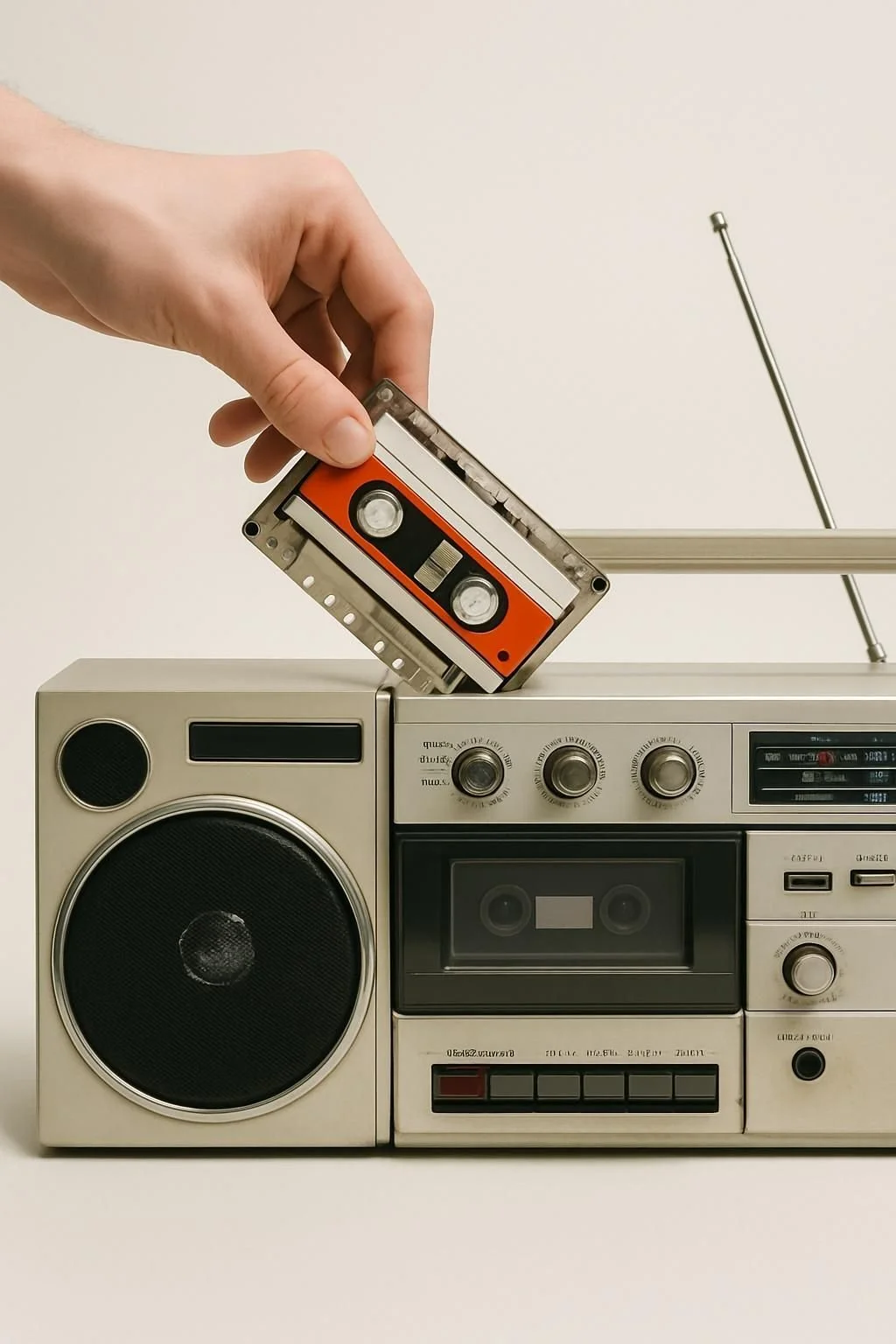
You get the idea. As a result, whenever you said, ‘Now we’re going to do a listening’, the students groaned. At the same time, listening was the skill that they found the most challenging, partly because at that time, apart from songs, it was hard for students to access material with which to practise listening outside the classroom. So when we started writing English File, one of the things to which we paid a lot of attention was creating audio that students would actually enjoy and would genuinely help them to improve their listening skills.
The first thing to do when creating most audio especially at lower levels is to script it. Teachers sometimes think that scripted material is ‘inauthentic’, but I think this misses the point. If, by authentic, teachers mean something you might hear on the radio, this is in fact often scripted, unless it’s an interview or a chat show and even then questions are scripted and topics pre-planned. For me the issue is really whether listening is scripted or unscripted, and we have always used a combination of both. At higher levels, particularly Advanced and Advanced Plus, the majority of listenings are unscripted, but there will still be scripted documentaries or podcasts. At low levels, unscripted listening can only be used judiciously if you want to avoid demotivating students. It can be done, for example, with ‘vox pops’ where we ask people simple questions, but only choose the most accessible answers. One of our key techniques is to create a script based on the features of a real answer or anecdote that we’ve recorded, so that we can preserve and incorporate features of natural speech, such as hesitations, stopping and starting, etc. and natural use of language. If you create a script without doing this, it is much more difficult to make it sound natural.
Above all, the important thing is to try to create material which makes students want to listen. Something we have used a lot throughout the series is having a reading, which could be an article, or a story, and then having the ending on audio, so students, who naturally want to know what happens in the end, are really keen to listen and find out. This works not only with fictional stories, like a murder mystery, where the denouement can be on audio, but also with real life stories, like the mysterious events at the Flannan Islands lighthouse, where three lighthouse keepers disappeared into thin air. Other important ingredients to make a listening more enjoyable are humour and good sound effects. At higher levels, where there is a lot more unscripted listening, it's often a question of finding people to interview who have something really interesting to say, for example, a music psychologist talking about why we listen to music, or using podcasts with information many students will genuinely want to know about, for example, how to survive a heatwave.
Once the script is finalised, it’s then a question of the actual recording. From the beginning, Clive and I, and all the other English File authors, have attended the recordings, which for the last few years have taken place at The Soundhouse studios in London.
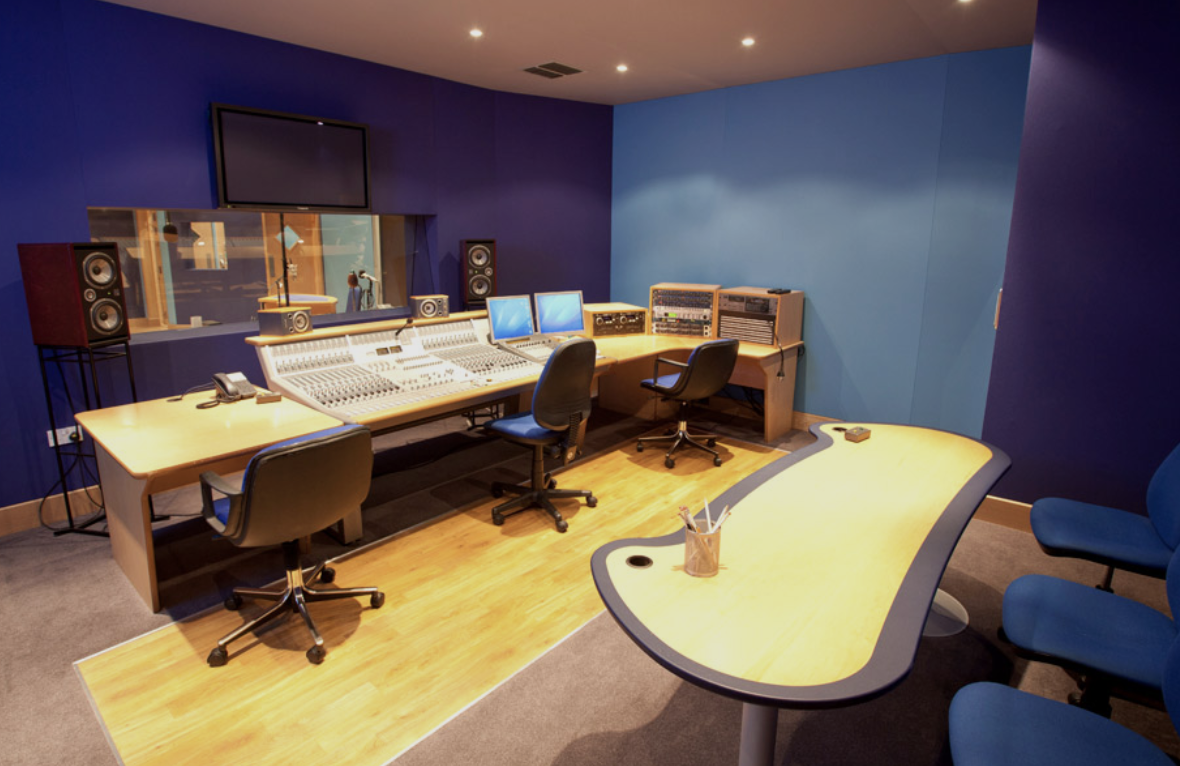
One of the studios at the Sound House.
Together with an editor, we sit at a table behind the producer and sound engineer. We can see the actors through the glass window. One of our roles is to check their speed, especially at low levels. Our aim is for speed to be as natural as possible – what should make it level-appropriate is the careful control of language. We also comment on the actors’ performances, make sure that they follow the script, and, with proofs in front of us on the table, check that the tasks work. During the recording session, we also explain what sound effects we want. This all requires total concentration, to make sure we don’t miss anything – it’s much harder than you might think, though luckily there’s always the option of rerecording to fix any issues.
One of the perks of going to the Soundhouse is that from time to time we have met famous actors there who have been making recordings in one of the other studios. The very last time we were there, for the final Advanced Plus recordings for 5th editions, I sat down on a sofa in the waiting area and found myself next to the great Derek Jacobi, now aged 87. We had a short chat, and I asked him what he was recording. He bent down, and with a twinkle in his eye, whispered in my ear, ‘Actually, I haven’t the foggiest!’.