Clive and I have both always been addicted to reading a daily newspaper. This was not easy in the early days in Spain because you could only buy an English newspaper the day after it had come out, or even later. The same was true of English magazines, which I also read when I could get hold of them. They were also at least three times as expensive as they would have been in the UK. However, as well as the pleasure we both got from reading them, they were a vital source of articles to use for English File. The ones I most remember reading at the time, and which in fact I still read now on a daily basis, were the Guardian and the Observer, and The Times and the Sunday Times, the latter a real treasure if you managed to get hold of it with all the supplements. As for magazines, I remember Marie Claire as being good for source material. I remember a great lesson from the second edition of Elementary called ‘Girls’ Night Out’, which was based on a Marie Claire article, where they sent female journalists from different offices all over the world on a ‘girls’ night out’, and then compared what they had got up to. Great for practising past tenses…
Our main criterion for choosing an article was that it should be something that students would choose to read if they came across it in their own language, and that they might want to tell someone about, in the sort of ‘I read a really interesting article the other day about…’ way. Clive also had this principle that there should be enough interesting articles in each level that if you were stuck on a bus or a train with nothing to read except your English coursebook (this was pre-mobile phone days, remember) there would be enough in English File to keep you going. Whenever we read an article that we thought we might want to use, we cut it out and filed it, remembering to write the date and publication on the back. This was vital because without this information, OUP couldn’t apply for permission to use it, and there were some occasions when we had forgotten to do this and spent ages desperately trying to remember where something had come from.
I still have some old box files full of articles which I couldn’t bear to throw away, but I have to admit that it is now so much easier to find or retrieve things thanks to the internet. I imagine that many of these old articles would be too dated to use, but it’s amazing how many topics come back again and again over the years. One lesson I particularly remember is from Intermediate, where the lexis is related to transport and the grammar is comparatives and superlatives. In the first edition, we used an article from The Times called ‘Race through the rush hour,’ where four journalists raced through the London rush hour using different forms of transport. In the second, the article was replaced with a new one about a race from London to the south of France. In the third and fourth editions, it was based on a race in the TV programme Top Gear, which was more recent – we thought it would appeal to teachers and students, as, given the popularity of the programme, they might even be able to watch the actual episode. In the fifth edition, it became a race that was held when the Elizabeth Line opened to find the quickest way of getting from central London to Heathrow. Not only did this seem like potentially genuinely useful information, but the travel website that had commissioned and filmed the race allowed us to use part of their video in the lesson. Other topics that recur frequently in the press (and where the information doesn’t change that much) are the best time of day to do things, or anything to do with personality tests, dating, and staying young – people obviously have an eternal interest in such subjects!
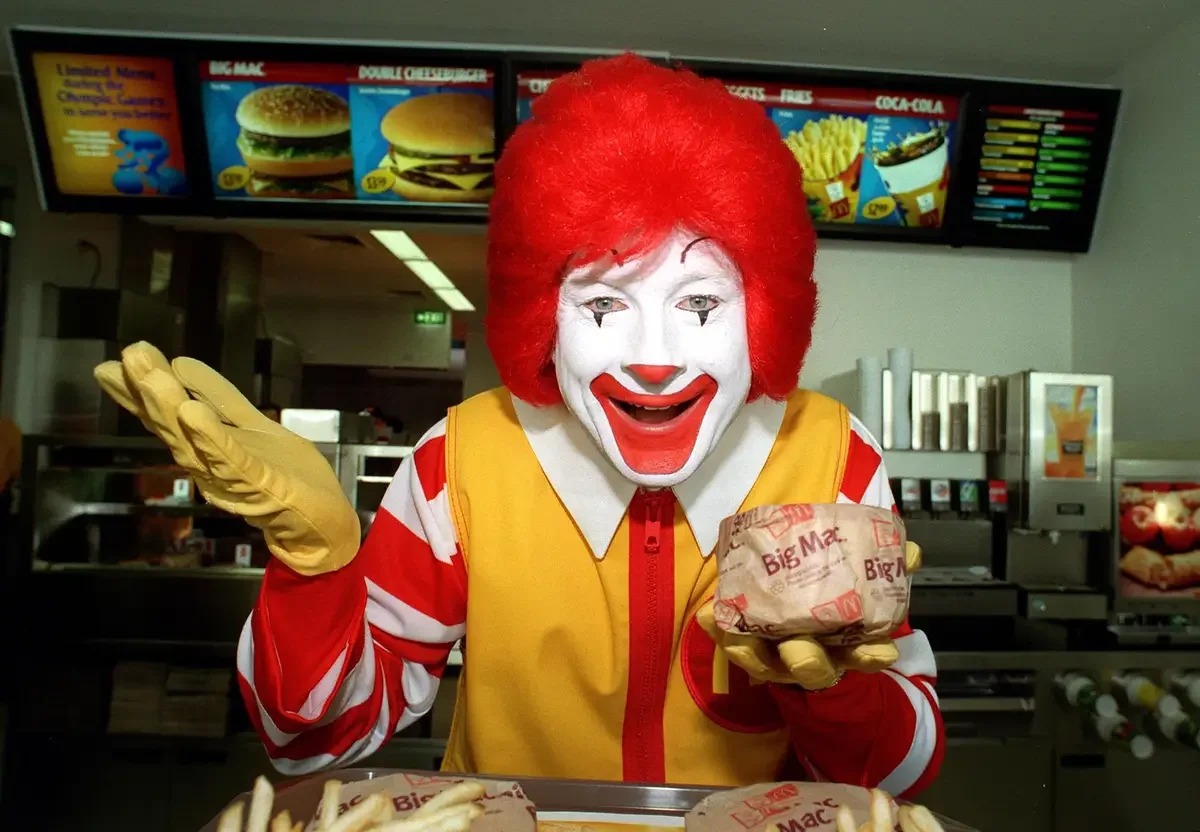
The infamous Ronald McDonald
One thing I will say though is that when we wrote the first edition, we had much more freedom to choose articles than we do today – pretty much anything we found interesting we were allowed to use. Some of this material, however, would certainly not be appropriate in today’s world! These are some examples of topics / angles, all from the first edition of Upper-intermediate, that we probably wouldn’t be able include nowadays…
An article criticizing McDonald’s (‘The man who killed mealtimes’), which said that small local restaurants all disappeared when a McDonald’s opened
An article criticizing the US company Mattel, describing how they had stolen the idea of Barbie from a German toy designer
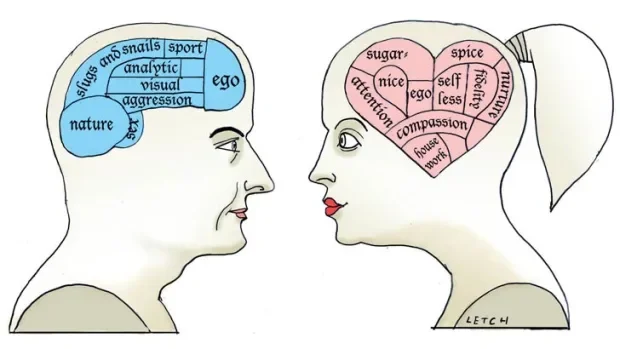
An article comparing the male and female brain, for which the first exercise was completing the different sized sections in a male and a female brain with things like sport, gossip, shopping addiction… and sex!
Jerry Lambert, later a co-author, took over as OUP editor of this book at a very late stage, when it was too late to change the texts, and was terrified that we would be sued by either McDonald’s or Mattel. We weren’t though.