
Not just a stopgap
I arrived in Valencia in Spain in 1976, with no teaching experience whatsoever, but as I was a native speaker, and native speakers were in demand at the time, I immediately got a job at a private language school in the city centre. It was owned by a Spanish man who spoke no English at all, but who had decided that a language school was a good business investment.
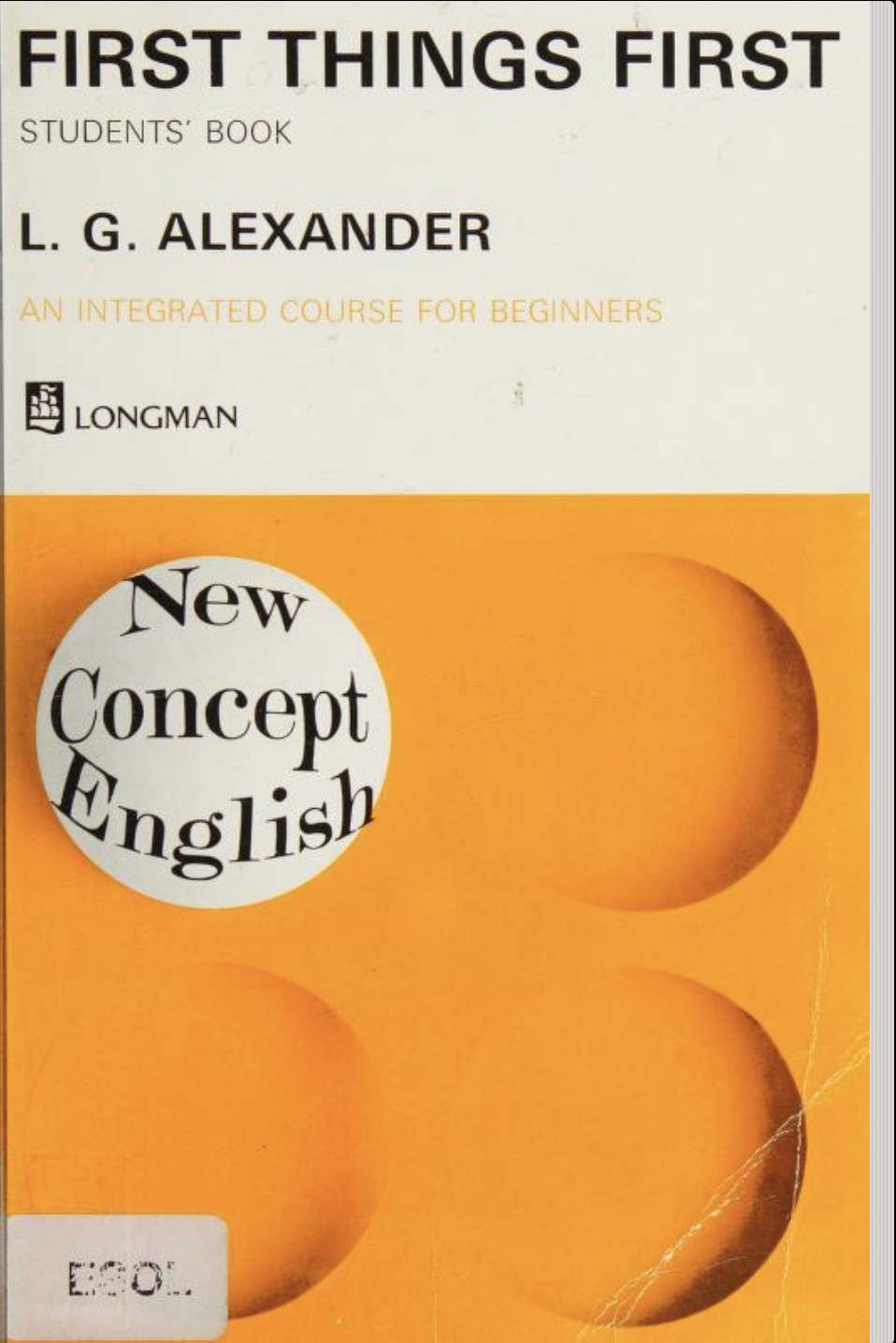
I was given a book, First Things First, by Louis Alexander, and told to work my way through it. This course, if I remember rightly, belonged to the early years of the communicative method, and its aim was to actually get students to speak as opposed to just doing grammar and translation. Its heart was in the right place, but compared to coursebooks that came later, it was only really suitable for an experienced teacher who knew what he or she was doing, which was not my case. Each lesson contained a presentation text or dialogue, exercises, and sentences to drill. I tried to answer students’ questions as best I could. One lesson I remember vividly was when a student put his hand up and asked me, ‘What is this do? Why do we need it? Why Do you live in Valencia? and not just Live you in Valencia??’ ‘Why indeed?’, I thought. ‘What is this do?’ At that moment, I realised that neither of the other languages I spoke, French and Spanish, used what I later discovered was an auxiliary verb to make questions in the present simple. I can’t remember what I answered the poor student, but it must have been very unsatisfactory.
I think this was a bit of a eureka moment for me, when I realised that in order to be a good teacher, I needed training. Maybe I also realised the importance of a good coursebook. I struggled on until the end of the year, probably gaining more in experience than my students did in language skills. Then the following summer, I went back to England and did what was then known as ‘the four-week course’, and is now called the CELTA course. It was run by International House in Piccadilly and it was truly excellent. It was immensely practical, but at the same time gave you the much-needed background in methodology. I loved it and it made me begin to realise that teaching English was not just a stopgap while I lived abroad, but might actually be what I really wanted to do.
I was very lucky that in the September after I finished the course, International House opened a school in Valencia, and I got a job there. I have very fond memories of those years. The staff room had a big table which we would all sit round, and there was a real exchange of ideas among teachers. I went on to do the RSA Diploma there (now called the DELTA), and ended up doing some teacher training myself, which I also enjoyed. The only downside was that we were only paid for nine months, and over the summer you were expected to find work doing intensive courses. I used to go back to London and teach at International House, and this, of course, gave me experience in teaching multilingual classes. In many respects, they were a joy to teach, mainly because their only common language was English, so getting them to talk to each other in English, unlike with my classes in Valencia, was never an issue. Speaking activities, which in Valencia would be over in a few minutes, could go on for hours. Through these contrasting teaching situations, I learned a lot about the comparative challenges of getting students in monolingual classes to speak to each other in English, and of course, all this fed into the English File methodology and the eventual tagline for the series, which is ‘English File gets students talking’.